Introduction
Your best‑selling SKU tells you what the market wants. Turning it into a private‑label winner requires spec control without technical headaches — and repeatable quality across every reorder. Here’s a step‑by‑step playbook you can lift and run.
Step 1 — Lock the Spec (Before You Touch Tooling)
- Market‑fit refinement: Confirm non‑negotiables: materials, finishes, packaging, compliance.
- Design for Manufacturing (DFM): Resolve risk features (tight tolerances, sharp corners, weak joints).
- Sampling cadence: T0 (appearance), T1 (functional), PP (production‑intent).
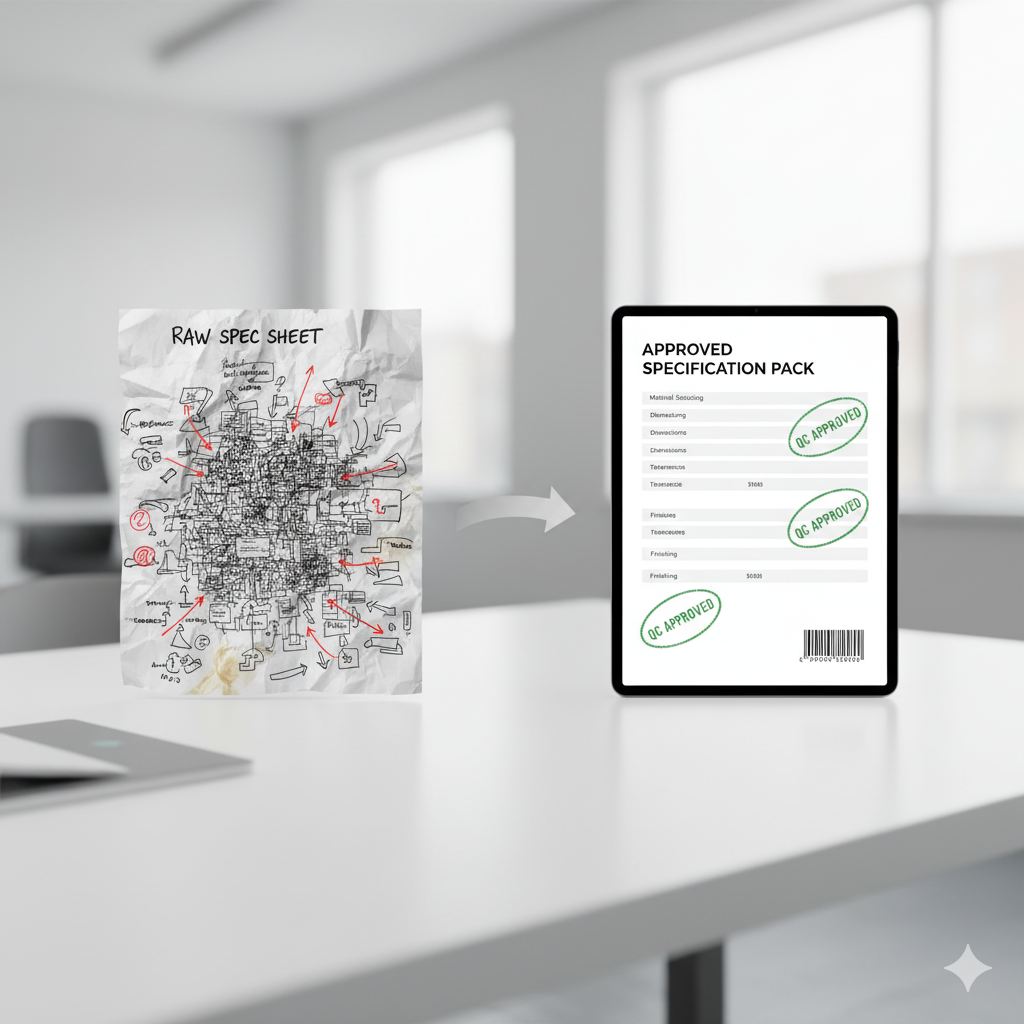
- Documentation: Golden sample + labeled defects library.
Step 2 — Build a Production‑Ready Supply Plan
- Primary + backup factory inside a vetted network.
- Materials lead‑time buffer for longest‑pole items.
- Critical path mapped with float and approval gates.
Step 3 — Engineer Quality Into the Line
- Inline QC checkpoints with go/no‑go criteria.
- AQL plan tuned to category risk and retail tolerance.
- Issue escalation with 24‑hour containment + corrective actions.
Step 4 — Package for Shelf and Compliance
- Barcode/label proofs approved pre‑PP.
- Drop tests and carton optimization to cut damage + freight.
- Regulatory docs bundled (Arabic where required) and verified.
Step 5 — Ship on Time, Reorder with Confidence
- Pre‑book logistics and assemble export docs during production.
- Post‑shipment review logs lessons → next PO spec v2.
- Reorder SOP ensures version control and repeatability.
Quality Safeguards Brand Builders Should Demand
- A single accountable PM with weekly stage‑gate reports.
- Factory scorecards (quality & on‑time metrics).
- Transparent pricing with fixed components and variance rules.