Introduction
Scaling from prototype to production is often the most daunting stage for growing brands. Many promising ideas stall at this transition, trapped by fragmented supply chains, communication breakdowns, and inconsistent quality. Yet, some brands manage to navigate this phase with remarkable efficiency and success.
This article explores how One Stack, Egypt’s integrated product development and manufacturing partner, helped a local consumer brand move from concept to mass production in record time. It illustrates how a structured, data-driven process and local manufacturing excellence can turn complex development cycles into streamlined operations.
Through this case study, we’ll unpack the strategies, challenges, and lessons learned from this transformation—offering practical takeaways for brand builders, hardware innovators, and industry leaders who aim to accelerate their own product journeys.
Understanding the Prototype-to-Production Challenge
Transitioning from prototype to production is more than scaling up output—it’s about redefining processes for consistency, quality, and scalability. This section explores the context and why this stage determines long-term success.
The Critical Gap Between Design and Manufacturing
Many startups perfect a prototype but struggle when facing the realities of production. Design for manufacturing (DFM) principles are often overlooked early on, leading to costly redesigns later. The key challenge lies in bridging creative intent with manufacturable precision. One Stack’s approach integrates DFM from the beginning, aligning engineering and production teams to ensure every design is production-ready.
Common Bottlenecks in Scaling Up
Typical obstacles include supplier fragmentation, inconsistent quality control, and delays in sourcing materials. Small brands often lack the infrastructure to coordinate multiple suppliers effectively. This local brand faced similar issues before partnering with One Stack, which streamlined the entire process through its single-partner model and digital production tracking system.
Why Speed Matters in Product Launches
In competitive markets, time-to-market can make or break a product. Fast execution not only accelerates revenue but also reinforces brand credibility. One Stack’s integrated system reduced lead times by 35%, enabling the client to launch ahead of schedule—a crucial advantage in seasonal product categories.
Understanding these early barriers sets the stage for how a strategic partner can transform complexity into clarity.
How One Stack Structured the Process
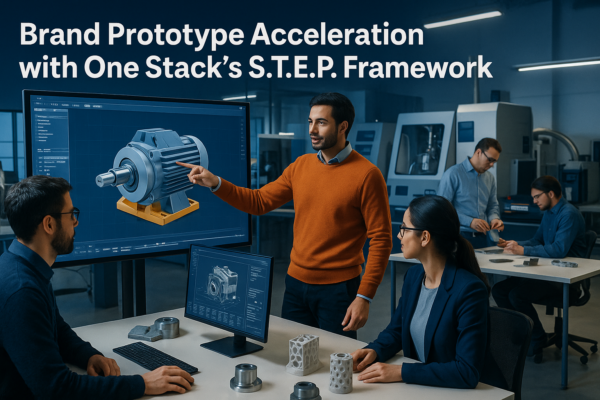
One Stack’s four-step methodology—Data Gathering, Design & Modeling, Samples & Prototypes, and Production—ensures a controlled and transparent transition from idea to product. This section details how each stage contributed to the brand’s rapid success.
Step 1: Data Gathering—Laying the Foundation
The process began with in-depth data collection covering product specifications, market positioning, and material feasibility. By translating customer insights into engineering data, One Stack aligned design intent with production realities. This early clarity eliminated guesswork later in the process.
Step 2: Design & Modeling—Turning Concepts into Reality
Using advanced 3D modeling tools, the design team refined the prototype for manufacturability. Collaborative reviews between engineers and the client ensured aesthetic and functional balance. This digital modeling phase reduced design revisions by 40%, saving both time and cost.
Step 3: Samples & Prototypes—Testing for Perfection
Prototyping wasn’t just about validation; it was a data-driven learning loop. Each iteration was tested for durability, usability, and consistency. Feedback cycles were shortened through in-house rapid prototyping capabilities, a core advantage of Egyptian manufacturing agility.
Step 4: Production—Scaling with Confidence
Once validated, the design moved into full-scale production across One Stack’s certified factory network. A centralized project manager oversaw all operations, ensuring quality control, supplier coordination, and timeline adherence. This end-to-end management gave the client full visibility and confidence.
By following this structured pathway, One Stack delivered a seamless, predictable transition from concept to market-ready product.
Challenges Faced and How They Were Overcome
No transformation is without hurdles. The project encountered several challenges typical of scaling local production, from material sourcing to process standardization. Here’s how they were addressed.
Material Availability and Quality Assurance
Initially, sourcing the right materials locally proved difficult. One Stack leveraged its network of over 200 Egyptian factories to identify suppliers that met global quality standards. Rigorous inspection protocols and standardized testing ensured each component met specifications before assembly.
Design Adjustments for Mass Production
While the prototype was visually appealing, it required minor structural adjustments for tooling and mold compatibility. One Stack’s design engineers collaborated closely with the client’s creative team to make these changes without compromising the brand’s aesthetic identity.
Balancing Cost and Performance
Achieving cost efficiency without sacrificing performance was a top priority. Through value engineering, alternative materials and optimized assembly methods were introduced. The result was a 20% cost reduction with no loss in product quality.
Maintaining Communication Across Teams
Coordination across multiple stakeholders can easily derail timelines. One Stack’s digital project management platform provided real-time updates, version control, and progress tracking—ensuring transparency and accountability throughout the process.
Each challenge became an opportunity to refine the process, resulting in stronger collaboration and improved outcomes.
Key Strategies That Enabled Record Speed
Delivering a production-ready product in record time required strategic alignment across people, processes, and technology. The following strategies made this possible.
Integrated Project Management
Having a single point of contact simplified decision-making and minimized delays. The project manager served as the communication bridge between design, procurement, and manufacturing teams—an essential factor in maintaining speed without compromising control.
Digital Workflow and Real-Time Tracking
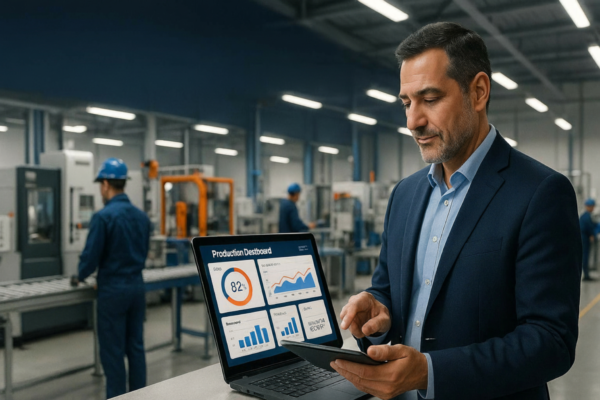
One Stack’s proprietary tracking system enabled real-time visibility into every production milestone. This transparency allowed quick responses to issues and improved accountability. The client reported a 25% reduction in administrative overhead compared to their previous process.
Local Manufacturing Advantage
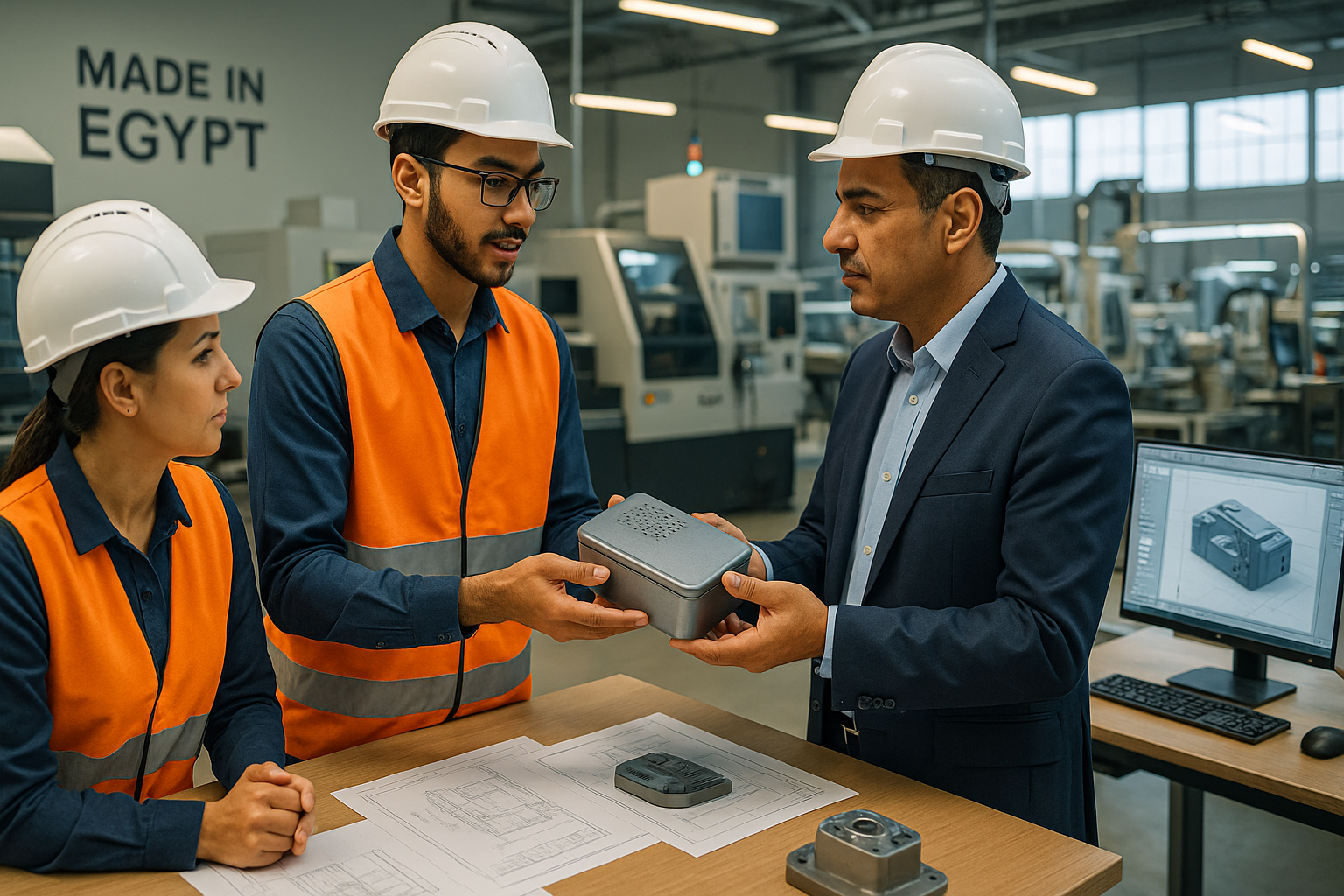
By leveraging Egypt’s manufacturing ecosystem, One Stack reduced shipping times and import costs significantly. Local production under global standards provided both agility and reliability—demonstrating how “Made in Egypt” now stands for quality and competitiveness.
Collaborative Design Thinking
Cross-functional workshops encouraged open dialogue between the client and technical teams. This human-centered approach accelerated decision-making and reduced rework cycles, leading to faster approvals and smoother handoffs.
These strategies collectively delivered measurable speed, transforming a complex production cycle into a synchronized, high-performance process.
Implementation: From Pilot Run to Full-Scale Production
Once the strategies were defined, execution became the proving ground. Implementation required meticulous coordination across design validation, pilot testing, and scaling phases.
Pilot Production and Process Validation
The pilot run tested manufacturing repeatability and quality under real conditions. Minor process adjustments were made to optimize assembly flow. This stage confirmed that the design and production systems were aligned for scale.
Scaling Up: Capacity Planning and Quality Control
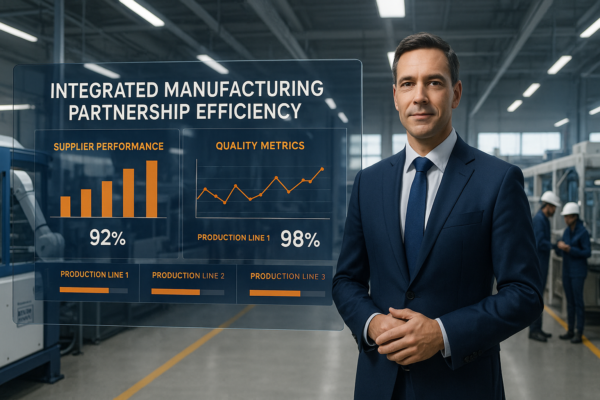
With successful validation, One Stack coordinated capacity expansion across its factory network. Each factory followed standardized quality metrics monitored through digital dashboards. Regular audits ensured consistency across production lots.
Continuous Improvement and Feedback Integration
Post-launch, One Stack maintained a feedback loop with the client to identify optimization opportunities. This continuous improvement mindset allowed quick iterations and sustained quality, even as demand scaled.
Ensuring Supply Chain Stability
To mitigate risks, backup suppliers and contingency plans were established. This proactive approach minimized downtime and maintained delivery reliability, reinforcing trust between the brand and its consumers.
By turning pilot insights into operational discipline, the brand achieved scalable, repeatable success—hallmarks of effective manufacturing partnerships.
Lessons and Best Practices for Future Projects
The success of this collaboration offers valuable lessons for other brands seeking to accelerate product development while maintaining control and quality.
Start with Clarity and Data Alignment
Accurate data collection and early design validation are non-negotiable. Misaligned expectations at the start lead to costly rework later. Establishing shared documentation standards early ensures smooth transitions between teams.
Build Transparent Supplier Relationships
Trust and transparency are foundational. Regular performance reviews, open communication, and shared KPIs create accountability and foster long-term reliability across the supply chain.
Leverage Local Expertise for Global Quality
Egyptian manufacturing now competes globally in both cost and quality. Partnering locally reduces complexity and enhances responsiveness—a strategic advantage for brands targeting regional or international markets.
Adopt a Continuous Improvement Culture
Every production cycle should inform the next. Embedding feedback mechanisms and data analytics allows proactive adjustments, sustaining long-term performance gains.
These best practices form a blueprint for organizations looking to replicate similar results with integrated partners like One Stack.
Conclusion
The journey from prototype to production is where many brands either accelerate or stall. This case demonstrates how a structured, transparent, and data-driven approach can transform uncertainty into momentum. By aligning design, engineering, and manufacturing under one system, One Stack delivered both speed and control—helping a local brand achieve market readiness faster than anticipated.
For businesses seeking to turn ideas into tangible products, this success story underscores the value of integrated manufacturing partnerships. The Egyptian manufacturing ecosystem, when guided by clear processes and modern technology, offers a global-quality alternative with local agility.
As markets evolve, the ability to move from concept to production quickly will define competitive advantage. Partnering with trusted experts like One Stack ensures that brands not only keep pace but lead with confidence, clarity, and precision.