Introduction
Launching a private-label product can be an exciting yet complex endeavor. Between design, prototyping, and production, many entrepreneurs find themselves overwhelmed by fragmented processes and unreliable suppliers. This is where a clear, integrated framework becomes invaluable. One Stack’s 4-step framework provides a proven pathway that simplifies the entire journey from idea to finished product.
In today’s fast-paced market, brand builders and innovators need more than just manufacturers—they need strategic partners who offer clarity, speed, and control. This article explores how One Stack’s streamlined 4-step approach helps transform product ideas into market-ready realities with minimal friction. We will break down each phase, highlight key advantages, and share practical insights to help you launch confidently.
By understanding this framework, you’ll gain a roadmap to accelerate your private-label product development while maintaining quality and cost efficiency. Whether you’re an e-commerce entrepreneur or a hardware innovator, these principles will help you build a product pipeline that works for you—not against you.
The Growing Complexity of Private-Label Manufacturing
Private-label manufacturing has evolved dramatically. As global supply chains expand and consumer expectations rise, managing multiple suppliers and ensuring consistent quality have become major challenges. Understanding this complexity is the first step toward simplifying it.
Fragmented Supply Chains Slow Down Innovation
Many entrepreneurs source from several vendors across design, prototyping, and production. This fragmentation leads to delays, miscommunication, and higher costs. When each stage operates in isolation, small errors multiply, causing expensive reworks and missed deadlines.
Quality Control Becomes Increasingly Difficult
Ensuring consistent quality across multiple suppliers is one of the toughest challenges in private-label manufacturing. Without unified oversight, discrepancies in materials, tolerances, or finishing standards can compromise the final product’s integrity and brand reputation.
Hidden Costs Erode Profit Margins
Unclear pricing, unexpected shipping fees, and production inefficiencies can quietly drain profitability. Without transparency, businesses struggle to forecast accurately or maintain control over their budgets. A single-partner model eliminates these hidden variables.
Egyptian Manufacturing: A Rising Competitive Edge
Egypt’s manufacturing ecosystem has matured into a hub that combines cost efficiency with global-quality standards. Companies like One Stack leverage this ecosystem to provide end-to-end services that rival international benchmarks while offering localized agility and cost advantages.
Recognizing these challenges underscores the need for an integrated approach that minimizes complexity and maximizes control—precisely what One Stack’s 4-step framework delivers.
Step 1: Data Gathering – Building the Foundation for Success
The first step in One Stack’s 4-step framework is data gathering. This phase sets the stage for every decision that follows, ensuring your private-label product launch starts with clarity and strategic alignment.
Understanding the Product Vision
Every successful project begins with a shared understanding of the product’s purpose and target audience. One Stack works closely with clients to define specifications, functional goals, and aesthetic preferences. This ensures that every design decision aligns with the brand’s identity and market intent.
Collecting Technical and Market Data
Accurate data drives better outcomes. This step involves gathering reference samples, competitor benchmarks, and technical drawings. Market analysis helps identify material preferences, price points, and compliance requirements—laying the groundwork for informed design and production decisions.
Clarifying Constraints and Opportunities
Through transparent dialogue, teams identify limitations—such as tooling constraints or material availability—while uncovering potential improvements. This proactive approach prevents costly changes later in the process and accelerates development timelines.
Establishing Clear Communication Channels
Effective communication ensures alignment between all stakeholders. One Stack assigns a dedicated project manager as a single point of contact, eliminating confusion and fostering accountability throughout the project lifecycle.
By concluding the data-gathering phase with complete clarity, businesses set the stage for efficient design and production with fewer revisions and surprises.
Step 2: Design & Modeling – Turning Insights into Tangible Concepts
Once the data foundation is solid, the next step is transforming ideas into detailed designs. This phase bridges creativity and engineering, ensuring the concept is both innovative and manufacturable.
Designing with Purpose and Feasibility
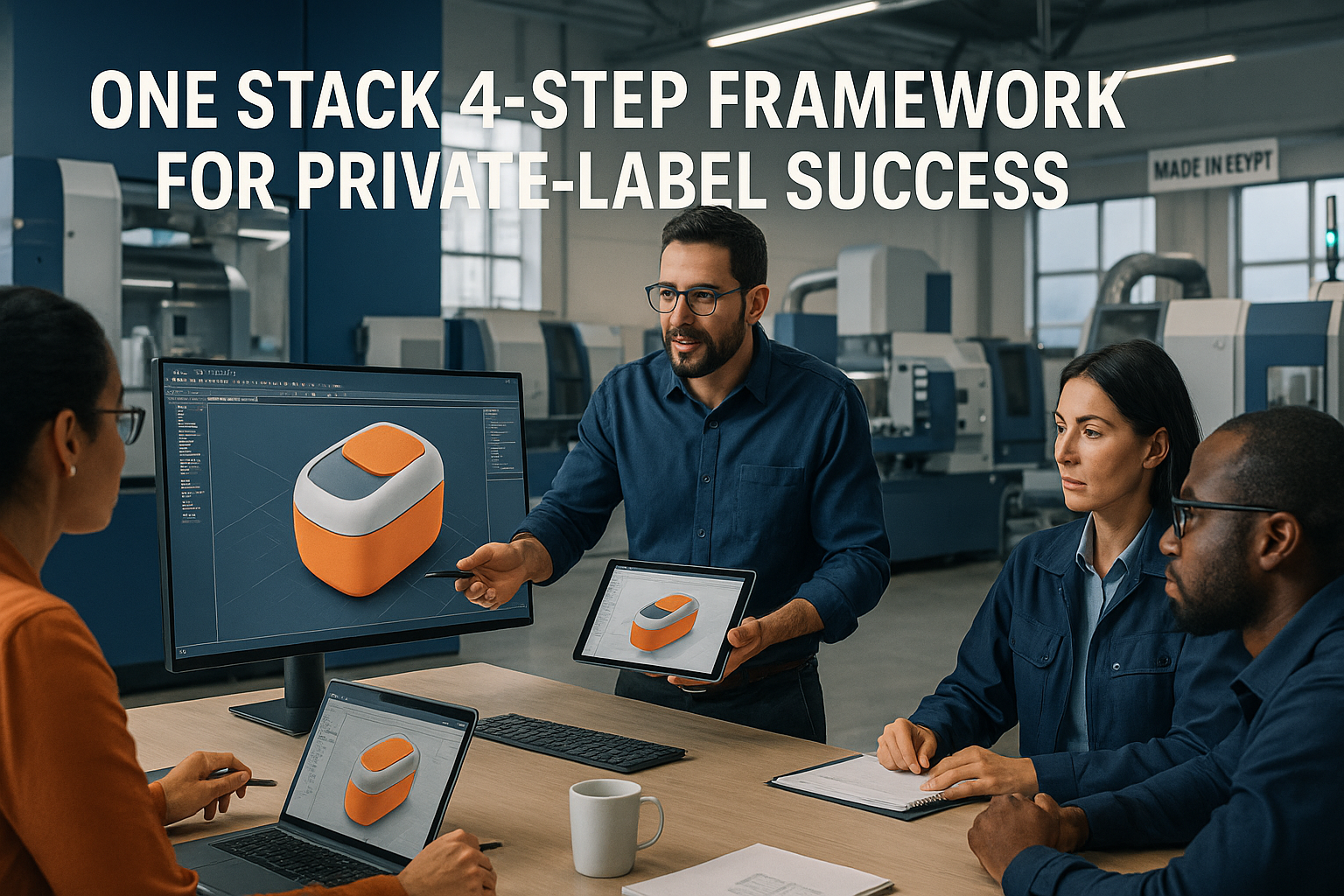
Design is not just about aesthetics—it’s about function, user experience, and production feasibility. One Stack’s design teams use advanced CAD tools to visualize concepts while considering real-world manufacturing constraints, ensuring that the product can move seamlessly from screen to factory floor.
Collaborative Iteration and Feedback Loops
Design refinement is a collaborative process. Through iterative feedback cycles, clients can review 3D models and suggest modifications in real time. This interactive approach saves time, reduces miscommunication, and builds confidence before committing to prototypes.
Integrating Material and Cost Considerations Early
By factoring in material selection and cost analysis during the design stage, One Stack helps clients avoid over-engineering or budget overruns. The goal is to achieve the optimal balance between performance, aesthetics, and affordability.
Creating Documentation for Production Readiness
Detailed drawings, BOMs (Bills of Materials), and tolerance specifications ensure that factories have everything needed for consistent output. Proper documentation minimizes ambiguity and supports scalability as production volumes grow.
Design & Modeling transforms ideas into validated, production-ready concepts, ensuring a smooth transition to the prototyping phase.
Step 3: Samples & Prototypes – Validating Design Through Real-World Testing
Prototyping is where ideas meet reality. It allows teams to test, validate, and refine before committing to full-scale production. One Stack’s approach ensures this phase is both fast and insightful.
Rapid Prototyping with Precision
Using advanced manufacturing technologies, One Stack delivers physical samples quickly and accurately. From 3D printing to CNC machining, prototypes reflect the final product’s form, fit, and function, enabling informed decisions.
Functional and Aesthetic Testing
Each prototype undergoes performance, durability, and usability assessments. These tests validate whether the design meets intended standards while offering opportunities for improvement. Aesthetic reviews ensure the product aligns with brand expectations.
Iterative Refinement for Perfection
Feedback from testing informs iterative refinements. Small adjustments—such as material changes or ergonomic enhancements—can significantly improve product performance and customer satisfaction.
Preparing for Scalable Production
Validated prototypes become the blueprint for large-scale manufacturing. At this stage, tooling, packaging, and assembly requirements are finalized to ensure seamless scalability and consistent quality in production.
Prototyping bridges imagination and execution, reducing risks and ensuring confidence before the production phase begins.
Step 4: Production – Delivering Consistent Quality at Scale
The final step in the 4-step framework focuses on bringing validated designs to market efficiently. Through a network of certified factories and strict quality management, One Stack ensures that every product meets the highest standards.
Coordinated Manufacturing Across Certified Partners
One Stack manages over 200 certified Egyptian factories, ensuring each project is matched with the right capabilities. This networked approach provides flexibility in volume, materials, and specialization while maintaining centralized oversight.
Quality Assurance and Continuous Monitoring
Every production run undergoes rigorous quality checks. From raw material inspection to final packaging, each stage follows documented protocols to guarantee consistency. Real-time reporting keeps clients informed and confident in the outcome.
Timeline and Cost Transparency
Clients receive clear production schedules and transparent pricing from the outset. This eliminates unexpected delays or expenses, aligning with One Stack’s core values of clarity, speed, and control.
Logistics and Delivery Optimization
Efficient logistics coordination ensures on-time delivery. Whether products are distributed locally or exported internationally, integrated supply chain management minimizes lead times and maximizes reliability.
This final step completes the transformation from idea to tangible product—ready for launch, backed by a partner who manages every detail seamlessly.
Best Practices for Successful Private-Label Product Launches
While the 4-step framework provides structure, success also depends on strategic execution. Applying best practices helps maximize efficiency and reduce risks throughout the process.
Start with Clear Market Validation
Before committing to production, validate demand through surveys, prototypes, or pre-orders. This ensures alignment between your product concept and real customer needs, reducing the risk of unsold inventory.
Maintain Transparent Communication
Consistent updates between stakeholders prevent misalignment. Using shared dashboards and milestone reports keeps projects on track and fosters mutual accountability—a principle central to One Stack’s client partnerships.
Invest in Scalable Systems Early
Choose systems, suppliers, and partners capable of scaling with your growth. Building scalability into your strategy early avoids production bottlenecks and supports long-term expansion.
Prioritize Quality and Brand Consistency
Private-label success depends on trust. Consistent product quality reinforces brand credibility. Implementing standardized QA processes ensures every product iteration meets customer expectations.
Adopting these best practices ensures your private-label launch is not only efficient but sustainable for long-term success.
The Future of Private-Label Product Development
As technology advances and consumer demands evolve, private-label manufacturing is entering a new era defined by speed, customization, and sustainability. Companies that embrace integrated frameworks will gain a lasting competitive edge.
Digital Transformation in Manufacturing
AI-driven design, digital twins, and predictive analytics are reshaping how products are developed. These tools reduce errors and accelerate timelines, aligning perfectly with One Stack’s emphasis on clarity and efficiency.
Sustainability as a Strategic Imperative
Eco-conscious consumers are driving demand for sustainable materials and ethical production. Manufacturers integrating green practices will not only meet regulatory requirements but also strengthen brand loyalty.
Regional Manufacturing Hubs Gain Momentum
Egypt’s strategic location and skilled workforce position it as a regional manufacturing hub. As global brands diversify supply chains, Egyptian facilities offer cost-effective, high-quality alternatives for private-label production.
Integrated Partnerships Define the Next Decade
Future success will rely on partnerships that blend design, engineering, and manufacturing into a single ecosystem. One Stack’s model exemplifies this evolution, providing a blueprint for how private-label brands can thrive in the years ahead.
The future favors those who simplify complexity—transforming fragmented processes into integrated, agile systems ready for rapid market shifts.
Conclusion
Launching a private-label product doesn’t have to be complicated. One Stack’s 4-step framework—Data Gathering, Design & Modeling, Samples & Prototypes, and Production—offers a clear path from idea to execution. By integrating these stages under one partner, businesses achieve faster launches, consistent quality, and better cost control.
In a market where speed and precision determine success, this approach eliminates unnecessary friction. Whether you’re a brand builder seeking market entry or an established company expanding your portfolio, adopting a structured framework ensures long-term efficiency and scalability.
Egyptian manufacturing continues to rise as a global force, and One Stack proudly leads that movement. By combining world-class standards with local agility, it empowers innovators to bring products to life with clarity, speed, and control.
For those ready to transform their ideas into real products, the journey begins with a single step—choosing the right partner to guide the way.