Introduction
When manufacturing meets project management discipline, something transformative happens. Processes become predictable, teams align around shared goals, and products move from concept to market with greater confidence and speed. In today’s competitive landscape, manufacturing efficiency alone is no longer enough—strategic coordination is the new frontier.
Project management principles, once confined to software or construction, are reshaping the manufacturing sector. They bring structure, accountability, and visibility to complex production environments. When applied correctly, these principles turn uncertainty into control and chaos into clarity. For product developers and supply chain leaders, this integration unlocks measurable improvements in cost, quality, and delivery timelines.
This article explores how project management discipline enhances manufacturing performance. It examines the challenges of uncoordinated production, the core frameworks that drive disciplined execution, and the real-world results companies achieve when both worlds converge. You will learn practical strategies to apply this mindset within your organization and discover how integrated partners like One Stack use these methods to deliver clarity, speed, and control across the entire product development lifecycle.
The New Era of Manufacturing Discipline
Manufacturing is evolving from purely operational execution to a coordinated, data-driven discipline. This shift reflects the growing complexity of global supply chains and the need for structured collaboration across departments.
From Production Lines to Project Pipelines
Traditional manufacturing treated each order as an isolated process. Today, manufacturers must think in terms of interconnected projects—each with milestones, dependencies, and stakeholders. This project-based approach creates visibility from concept through delivery. It allows leaders to anticipate bottlenecks, allocate resources effectively, and ensure every stage contributes to the final goal.
The Rise of Cross-Functional Accountability
Modern production involves multiple disciplines: design, engineering, procurement, and logistics. Project management discipline ensures these teams operate as one integrated unit. Clear ownership, progress tracking, and regular reporting align efforts across functions. This reduces miscommunication, accelerates problem-solving, and builds a culture of accountability that drives consistent results.
Turning Data into Decisions
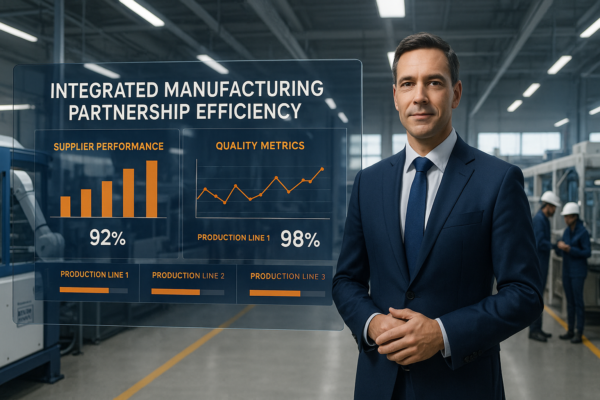
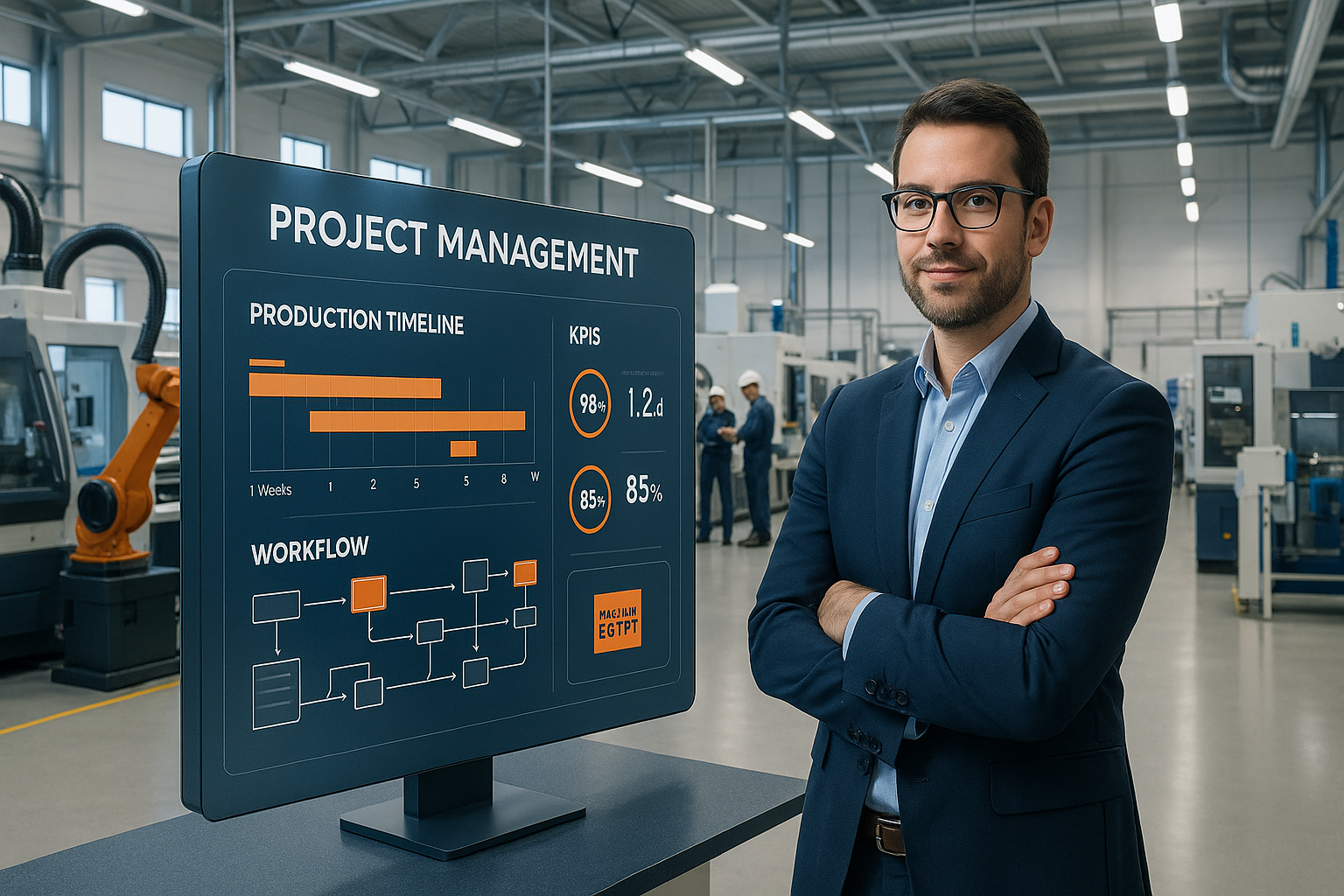
Project management emphasizes metrics and performance tracking—an ideal complement to manufacturing’s data-rich environment. When production data is structured within a project framework, leaders can identify inefficiencies faster and make informed decisions. Dashboards and key performance indicators (KPIs) provide real-time feedback, transforming manufacturing management from reactive to proactive.
By combining operational execution with project structure, manufacturers gain both agility and control—an essential foundation for sustained competitiveness.
Core Principles of Project Management in Manufacturing
Applying project management discipline to manufacturing requires adapting proven frameworks to fit production realities. The following principles form the backbone of this integration.
Defining Clear Objectives and Scope
Every successful project begins with clarity. In manufacturing, this means defining product specifications, production targets, and quality benchmarks upfront. A well-defined scope prevents scope creep—a common cause of delays and cost overruns. It also ensures all teams understand what success looks like before work begins.
Establishing Structured Timelines and Milestones
Project management thrives on time-bound milestones. In manufacturing, these milestones might include design approval, prototype completion, tooling readiness, and production launch. Structured timelines help synchronize suppliers, engineers, and production teams, ensuring progress remains measurable and predictable throughout the product lifecycle.
Implementing Risk Management Frameworks
Manufacturing projects face risks ranging from material shortages to equipment failure. Project management introduces systematic risk assessment and mitigation planning. By identifying potential issues early, teams can create contingency strategies—reducing disruptions and maintaining consistent output.
Continuous Communication and Reporting
Transparent communication channels are the lifeblood of disciplined project execution. Regular updates, progress meetings, and performance dashboards keep stakeholders aligned. This visibility builds trust and ensures timely decisions—critical for maintaining momentum in fast-paced manufacturing environments.
These principles create a framework that turns manufacturing operations into well-orchestrated projects where clarity, accountability, and results drive every decision.
Common Challenges When Manufacturing Lacks Project Discipline
Without structured project management, manufacturing operations often struggle with inefficiency and unpredictability. Understanding these pitfalls is the first step toward improvement.
Fragmented Communication Across Teams
In traditional setups, departments operate in silos—designers hand over incomplete information, procurement delays materials, and production teams rush to meet deadlines. The absence of a unified framework leads to confusion, rework, and wasted effort. A project-based approach eliminates these barriers through centralized coordination and shared visibility.
Uncontrolled Scope and Schedule Drift
Without defined milestones or accountability, projects easily expand beyond their original intent. Minor design changes or supplier delays can ripple across the production schedule. Project management discipline introduces baselines and change control processes to maintain focus and prevent cost escalation.
Inconsistent Quality and Late Deliveries
Lack of structured oversight often results in quality deviations and missed deadlines. When processes are reactive rather than planned, teams spend more time firefighting than improving. By contrast, a disciplined project framework embeds quality checkpoints and schedule tracking, ensuring consistency from prototype to final batch.
Limited Visibility for Decision-Makers
Executives and project leads often lack real-time insight into production performance. Without accurate data, strategic decisions become guesswork. Integrating project management tools provides dashboards that visualize progress, costs, and risks—empowering leaders with actionable intelligence.
Recognizing these challenges underscores why manufacturing must evolve toward structured project management models to sustain competitiveness.
Strategies for Integrating Project Management into Manufacturing
Bringing project discipline into manufacturing doesn’t happen overnight. It requires structured planning, cultural adaptation, and the right tools.
Start with Process Mapping
Before applying project frameworks, map out current manufacturing workflows. Identify dependencies, bottlenecks, and overlapping tasks. This baseline understanding allows project managers to design workflows that align with production realities while introducing structured checkpoints for control.
Adopt Digital Project Management Tools
Platforms that integrate scheduling, resource allocation, and performance tracking bridge the gap between planning and execution. When linked with manufacturing execution systems (MES), these tools provide end-to-end visibility—from design changes to on-floor progress. One Stack, for example, employs integrated dashboards that give clients real-time insight into their product journey.
Train Teams in Cross-Functional Collaboration
Project management thrives on collaboration. Training manufacturing teams to think beyond their departments fosters shared accountability. Workshops, regular reviews, and communication protocols help teams align around project goals and timelines, reducing friction and delays.
Embed Continuous Improvement Loops
Every project offers lessons. Embedding post-project reviews and performance analyses ensures that each production cycle becomes smarter. Lessons learned feed back into planning, enhancing future efficiency and quality.
Strategic integration of these elements transforms manufacturing into a structured, learning-driven system capable of delivering consistent excellence.
Practical Implementation Framework
Turning theory into practice requires a clear framework. The following step-by-step approach helps manufacturers embed project management discipline effectively.
Step 1: Define the Project Charter
Outline objectives, scope, deliverables, and success metrics. A clear charter ensures alignment before execution begins. It also provides a reference point for managing changes and expectations throughout the project.
Step 2: Build a Cross-Functional Team
Assemble representatives from design, engineering, procurement, and production. Assign roles and responsibilities with explicit accountability. Balanced representation ensures that every decision considers technical feasibility and operational constraints.
Step 3: Create a Master Schedule
Develop a timeline with defined milestones and dependencies. Use project management software to visualize the critical path and resource allocation. Regular updates ensure agility in responding to unforeseen challenges.
Step 4: Monitor, Report, and Optimize
Implement dashboards to track progress, costs, and risks. Weekly reviews and data-driven decisions maintain project control. Over time, analyze performance metrics to identify patterns and optimize future production cycles.
When executed consistently, this framework embeds discipline into manufacturing culture—driving predictability, efficiency, and innovation.
Best Practices for Sustained Success
Maintaining momentum requires ongoing commitment. These best practices ensure project management discipline becomes a lasting part of manufacturing excellence.
Foster a Culture of Ownership
Empower every team member to take responsibility for project outcomes. Recognition programs and transparent progress tracking encourage proactive engagement. A culture of ownership transforms discipline into intrinsic motivation.
Leverage Data Analytics for Continuous Improvement
Analyze performance metrics to identify recurring issues and opportunities. Predictive analytics can forecast equipment downtime or supply chain delays, enabling preemptive action. Data-driven decision-making strengthens reliability and reduces waste.
Balance Flexibility with Control
While structure is vital, flexibility ensures resilience. Adaptive project management allows manufacturers to adjust to evolving requirements without losing control. This balance supports innovation while maintaining efficiency.
Partner with Integrated Experts
Collaborating with experienced manufacturing partners like One Stack accelerates transformation. Their integrated approach combines design, prototyping, and production under one disciplined framework—delivering the clarity, speed, and control modern businesses demand.
Embedding these practices ensures project management discipline remains a living system that evolves with your organization’s growth and market demands.
The Future of Manufacturing Project Management
The next frontier lies in digital transformation and predictive project management. Emerging technologies are redefining how manufacturers plan, monitor, and deliver projects.
AI and Automation for Predictive Control
Artificial intelligence is enabling predictive scheduling, automated quality inspection, and real-time risk detection. These tools extend project management capabilities by turning data into foresight—anticipating problems before they occur.
Digital Twins and Simulation Models
Digital twins create virtual replicas of manufacturing systems. Project managers can simulate production scenarios, optimize resource allocation, and test design changes without physical risk. This predictive capability revolutionizes planning accuracy and agility.
Global Collaboration Through Cloud Platforms
Cloud-based project tools enable global teams to collaborate seamlessly. Whether a designer in Cairo or a supplier in Europe, everyone works from the same data environment. This transparency enhances coordination and compresses product development timelines.
Egypt’s Role in the Future of Disciplined Manufacturing
Egyptian manufacturing is gaining international recognition for quality and cost efficiency. As local industries adopt advanced project management practices, they strengthen their position as reliable global partners. One Stack exemplifies this transformation—demonstrating how Made in Egypt can stand for precision, innovation, and world-class execution.
The fusion of technology, discipline, and local expertise signals a promising future for manufacturing worldwide.
Conclusion
When manufacturing meets project management discipline, operations move from reactive to strategic. Processes align, teams communicate effectively, and outcomes become predictable. The result is not just efficiency—it’s confidence in every stage of production.
By integrating structured planning, risk management, and data-driven oversight, manufacturers gain the agility to adapt and the control to deliver. Whether launching a new product or scaling production, disciplined execution ensures clarity, speed, and quality. Organizations that embrace this approach will define the next generation of manufacturing excellence.
For businesses seeking a partner that embodies these principles, integrated manufacturers like One Stack offer a proven path. With deep expertise, a network of certified Egyptian factories, and end-to-end project management, One Stack transforms ideas into tangible products—made with precision, managed with discipline, and delivered with pride.